
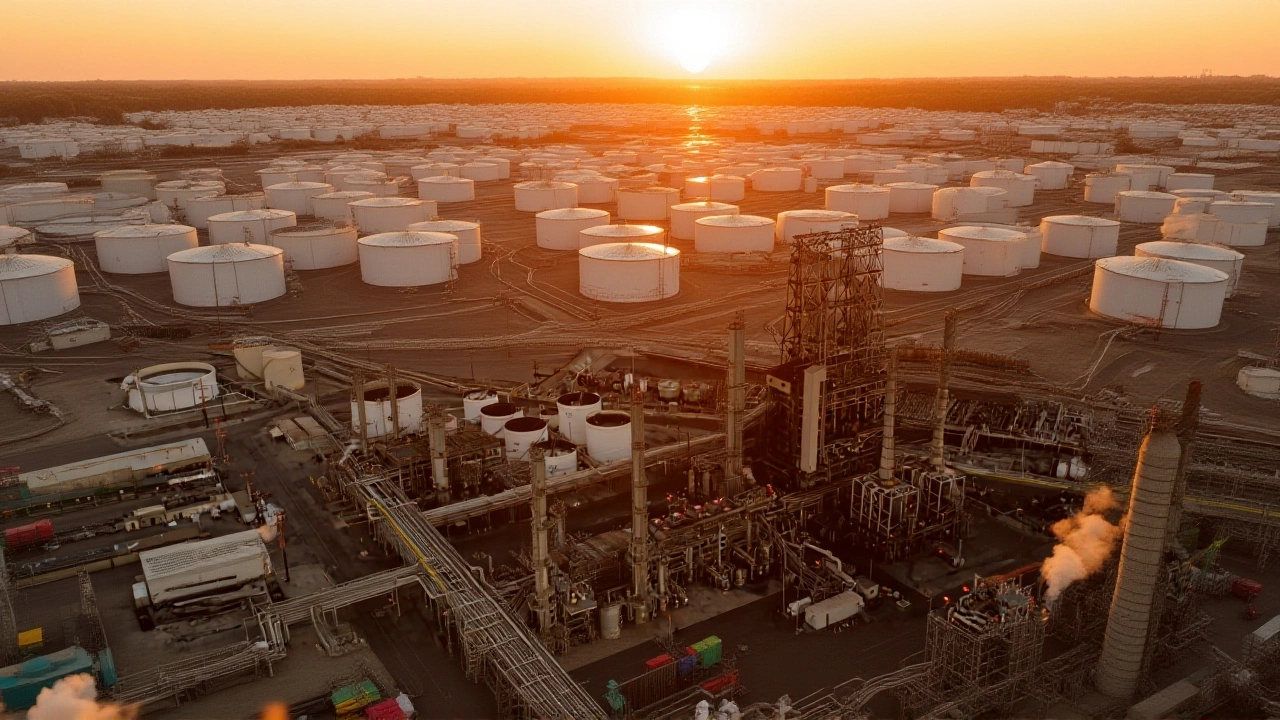
When The United States announced a blockade of the Strait of Hormuz, global markets didn't just twitch—they panicked. On Monday, crude oil prices skyrocketed by 10%, pushing both major benchmarks past the psychological barrier of $100 per barrel for the first time in months. This isn't just a number on a ticker; it's a direct result of failed negotiations with Iran and a sudden, severe supply risk that has traders scrambling.
By 10:45 AM, the damage was clear. Brent Crude jumped 7.41%—or $7.05—to hit $102.20 per barrel. Meanwhile, West Texas Intermediate (WTI) surged even harder, climbing 8.54% ($8.25) to reach $104.80. The volatility was instantaneous, driven by fears that this critical maritime chokepoint, through which roughly 20-30% of the world's oil passes, could be shut down entirely.
The Geopolitical Trigger
Here’s the thing: markets hate uncertainty, but they hate blocked supply lines even more. The surge wasn't random. It followed the collapse of diplomatic talks between Washington and Tehran. With negotiations dead, the U.S. decision to restrict access to the Strait of Hormuz sent shockwaves through energy sectors globally.
The Strait is the world’s most important oil shipping lane. If it’s blocked, Middle Eastern exports to Asia and Europe face massive delays or rerouting costs. Traders priced in this risk immediately. While the exact timeline of the blockade order remains murky, the market reaction was swift and brutal. We’ve seen similar spikes before during regional conflicts, but a deliberate blockade by a superpower is a different beast entirely.
Impact on Indian Markets
The ripple effects hit home fast. In India, the Multi Commodity Exchange (MCX) saw crude oil futures for the April 20 contract jump 7.61%. That translates to a rise of ₹697, landing at ₹9,850 per unit. For an import-heavy economy like India, where over 85% of oil needs are met from abroad, this price spike means higher inflation risks and potential fuel price hikes for consumers within days.
Analysts warn that if the blockade holds, these numbers could look conservative next week. The correlation between international benchmarks and domestic futures is tight, meaning every dollar Brent gains pushes Indian futures higher almost mechanically.
Conflicting Signals and Future Outlook
But wait—it’s not all one-way traffic. Just recently, on May 25, 2026, we saw the opposite play out. When hopes for a U.S.-Iran peace deal flickered, Brent crude slipped below $100, trading at $99.39 before dipping to a three-week low of $94.82. That volatility shows how sensitive the market is to political headlines.
Yet, the long-term trend is undeniably upward. Data from Vietnam.vn indicates that year-over-year, Brent prices have risen by 65.72%, while WTI has climbed 64.05%. Even with daily swings, the baseline cost of energy is significantly higher than last year. Technical indicators on platforms like Investing.com India showed a "strong sell" signal earlier, suggesting some traders were betting against the rally—but those bets likely got crushed when the blockade news broke.
What This Means for Investors
For retail investors, understanding the mechanics helps navigate the chaos. A standard Brent CFD contract represents one barrel (158.988 liters), with a lot size of 1,000 barrels. With tick sizes of 0.01 and tick values of 10, small moves can mean big money. But right now, technical analysis takes a backseat to geopolitics. You can’t chart your way out of a supply shock.
The details of the blockade’s duration are still unclear. Will diplomacy resume? Will other nations intervene? Until then, expect high volatility. Watch for any official statements from the White House or Iranian leadership. Those will be the next catalysts.
Frequently Asked Questions
Why did oil prices surge past $100?
The surge was triggered by the U.S. blocking the Strait of Hormuz after failed talks with Iran. This threatens global supply chains, causing immediate panic buying and price spikes in Brent and WTI crude.
How does this affect Indian consumers?
India imports most of its oil. Higher global prices lead to increased costs for petrol, diesel, and aviation fuel. We may see pump price hikes soon, along with broader inflationary pressure on goods and transport.
Is the Strait of Hormuz really that important?
Yes. It’s the world’s busiest oil transit point. Approximately 20-30% of globally consumed oil passes through it daily. A blockade disrupts supplies to key economies in Asia and Europe, creating instant scarcity.
Could prices drop back down quickly?
Possibly. Recent history shows prices dipped to $94.82 when peace hopes emerged. If diplomatic channels reopen or the blockade is lifted, prices could correct sharply. However, the long-term trend remains bullish due to underlying supply constraints.
What should traders watch next?
Traders should monitor official statements from the U.S. State Department and Iranian officials. Any sign of de-escalation will cause sell-offs. Conversely, military escalations or extended blockade orders will push prices higher.