
When DRDO (Defence Research and Development Organisation) and the Indian Air Force launched a test flight off the coast of Odisha on May 7, 2026, they didn't just fire a missile. They changed the calculus of aerial warfare for India.
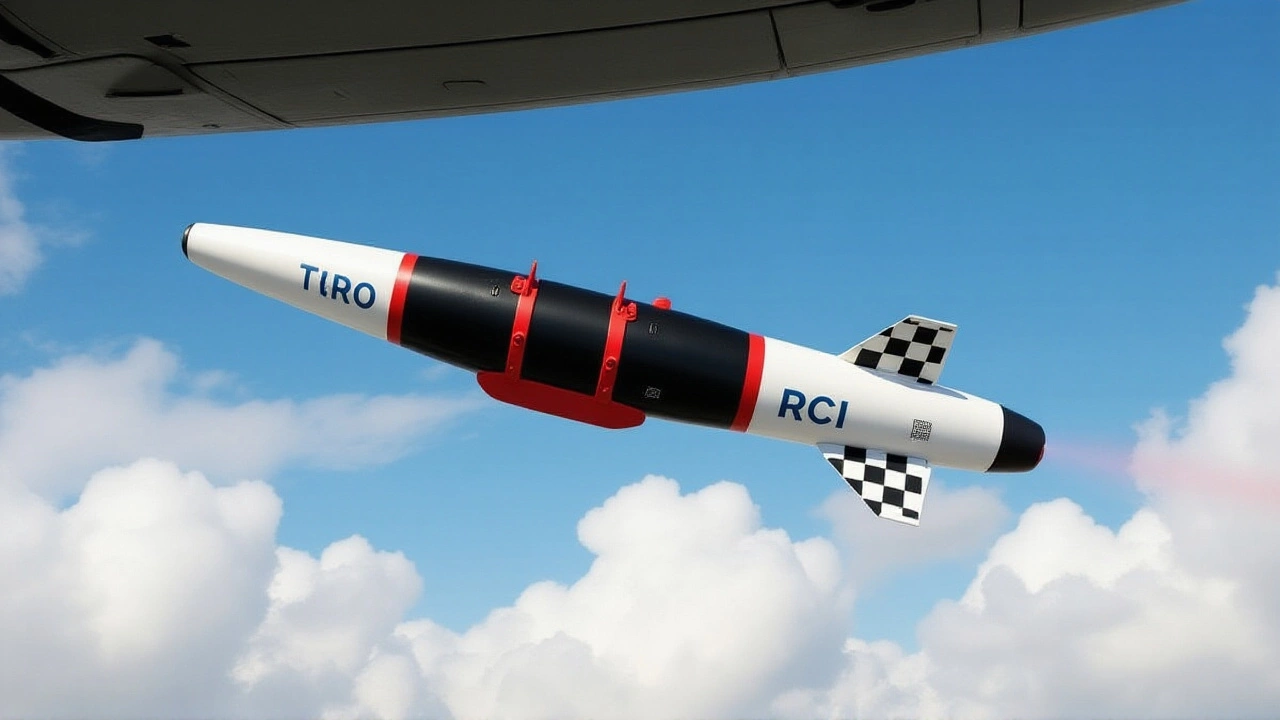
The payload was TARA (Tactical Advanced Range Augmentation), India's first indigenous glide weapon system. It’s not a traditional rocket or bomb. Think of it as a smart kit that turns ordinary, unguided munitions into precision-guided strikes. The successful test marks a major leap in domestic defense capabilities, allowing aircraft to hit ground targets with surgical accuracy from safer distances.
A Game-Changer in Precision Warfare
Here’s the thing about modern air combat: range and accuracy are everything. If you can stay out of enemy anti-aircraft fire while still hitting your target dead center, you’ve won half the battle before it starts. That’s exactly what TARA does.
Developed primarily by the Aeronautical Development Establishment (ADE) in Hyderabad—often referred to in reports as RCI Hyderabad—in collaboration with other DRDO labs, TARA is a modular range extension kit. It attaches to existing warheads. Once deployed from an aircraft, the kit deploys wings or gliding mechanisms, extending the weapon’s reach significantly compared to free-fall bombs.
But wait—it doesn’t just go farther. It goes smarter. The system converts dumb bombs into precision-guided weapons. This means lower costs without sacrificing lethality. For a country like India, which needs to maintain large stockpiles of ammunition, this cost-efficiency is huge. You get high-end performance at a fraction of the price of dedicated guided missiles.
The Test Flight Details
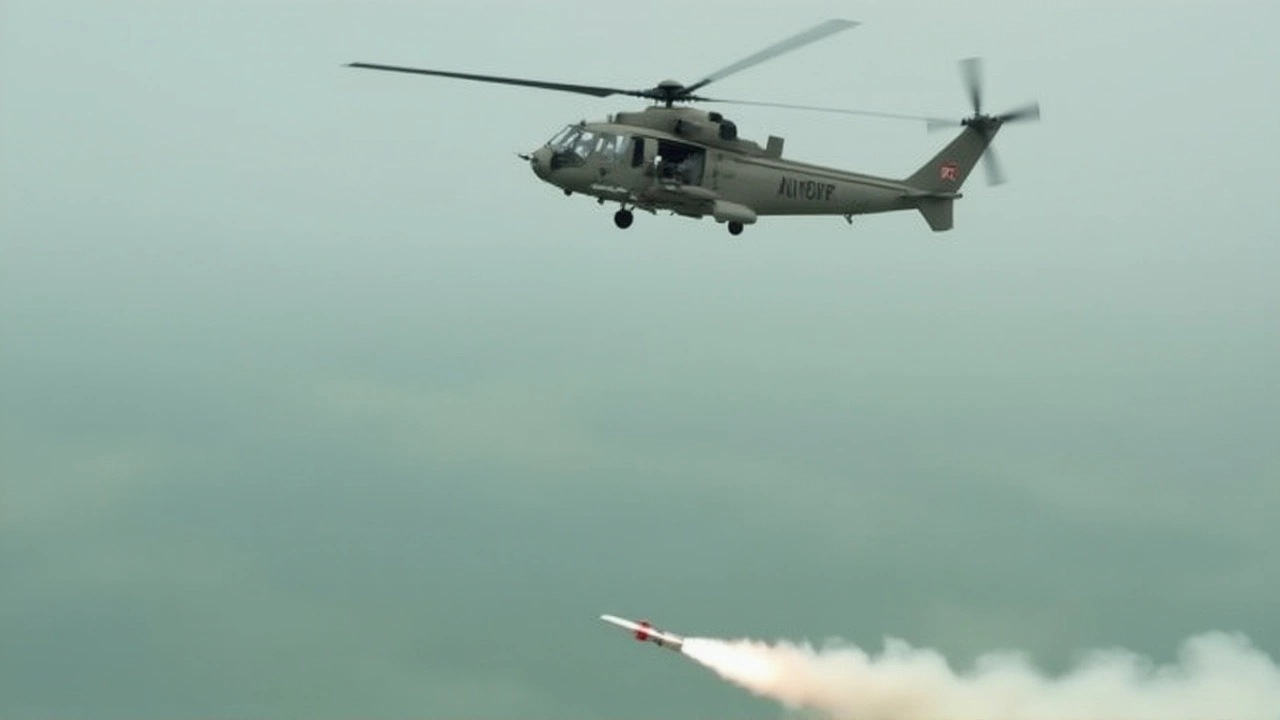
The trial took place over the Bay of Bengal, near the Odisha coastline. Why there? Coastal ranges offer vast, unpopulated airspace perfect for testing long-range trajectories without risking civilian safety. On that day, the integrated team from DRDO and the IAF executed the launch flawlessly.
According to official statements shared via social media platform X, all parameters were met. The weapon glided as predicted, maintained stability, and demonstrated its ability to navigate toward designated coordinates. This wasn’t just a prototype wobble; it was a validated operational concept. The Ministry of Defence confirmed that TARA represents a "state-of-the-art" low-cost solution, emphasizing its potential to augment current air force inventories immediately rather than requiring entirely new procurement cycles.
Political and Strategic Significance
Rajnath Singh, Minister of Defence of India, hailed the achievement as a significant milestone for India’s self-reliance in defense technology. He praised the joint efforts of DRDO, the Indian Air Force, and industry partners.
"This is a major step forward in enhancing our indigenous defense capabilities," Singh stated. His endorsement signals strong political backing for continued investment in such projects. In a region where neighbors are rapidly upgrading their arsenals, having homegrown solutions reduces dependency on foreign suppliers who might impose usage restrictions during conflicts.
Consider the alternatives. Countries often rely on imported kits like the US-made JDAM or European equivalents. While effective, these come with strings attached—political conditions, export controls, and higher costs. TARA breaks that chain. It puts control firmly in New Delhi’s hands.
How TARA Changes the Battlefield
Let’s break down why this matters beyond the headlines. Traditional unguided bombs require pilots to fly directly over targets, exposing them to surface-to-air missiles (SAMs). With TARA, aircraft can release payloads from outside the effective range of many SAM systems. The weapon then glides into position, guided by onboard navigation systems.
This standoff capability saves lives. Pilots aren’t forced into dangerous dive-bombing runs. Additionally, because TARA is modular, it can potentially be retrofitted onto various existing platforms within the IAF fleet, including Sukhoi Su-30MKIs and Mirage 2000s, maximizing utility across different aircraft types.
The economic angle is equally compelling. Guided munitions are expensive. A single precision missile can cost hundreds of thousands of dollars. By converting cheaper, standard warheads using TARA, the military achieves similar precision at a drastically reduced per-unit cost. This scalability allows for sustained operations in prolonged conflicts where ammo consumption rates spike.
What’s Next for TARA?
The May 7 test was the maiden flight, but it’s only the beginning. Future trials will likely focus on night operations, adverse weather conditions, and integration with different aircraft platforms. Experts anticipate induction into service could happen within the next few years, pending final acceptance tests by the armed forces.
There’s also talk about expanding TARA’s applications beyond tactical strikes. Could it be adapted for naval use? Or even drone-delivered payloads? The modular nature suggests flexibility. As DRDO refines the guidance algorithms and aerodynamic design, we may see variants tailored for specific mission profiles.
For now, the message is clear: India has joined an elite club of nations capable of developing advanced glide weaponry domestically. It’s a small box, perhaps, but its impact on the strategic landscape is anything but minor.
Frequently Asked Questions
What exactly is the TARA weapon system?
TARA stands for Tactical Advanced Range Augmentation. It is a modular kit developed by DRDO that attaches to unguided munitions, transforming them into precision-guided glide weapons. This extends their range and accuracy, allowing aircraft to strike targets from a safer distance without needing expensive standalone guided missiles.
Where and when was the first test conducted?
The maiden test flight of TARA was successfully conducted on May 7, 2026. The trial took place off the coast of Odisha, India, over the Bay of Bengal. This location was chosen for its expansive airspace, ideal for testing long-range glide trajectories safely away from populated areas.
Who developed the TARA system?
The system was designed and developed by the Aeronautical Development Establishment (ADE), part of DRDO, located in Hyderabad. They collaborated with other DRDO laboratories and worked closely with the Indian Air Force to ensure the system meets operational requirements. Industry partners also played a role in manufacturing components.
Why is TARA considered a breakthrough for India?
TARA is India’s first indigenous glide weapon system. Previously, India relied on imports for similar precision-guided technologies. TARA offers a cost-effective solution by converting cheap, unguided bombs into accurate weapons. This reduces dependency on foreign suppliers, lowers operational costs, and enhances strategic autonomy in defense procurement.
How does TARA improve pilot safety?
By enabling standoff attacks, TARA allows aircraft to release munitions from outside the effective range of many enemy air defense systems. Instead of flying directly over hostile territory to drop bombs, pilots can stay at a safe distance. The weapon then glides to the target, significantly reducing the risk to both the aircraft and its crew.